First Day, First Impressions
After the chaos of the journey, sleep came quickly that evening – and deeply. Tomorrow would be the first real day.
Monday morning. First bus, first agency, first conversation in Spanish. Elena from Mundus welcomed me warmly and gave me a brief introduction to Zaragoza: where I’d be working, what to expect, what I still needed to know. The coworking space is conveniently located on the same street – an office I’ll share with other students from time to time.
A little later came the first proper work conversation. Alex, my point of contact, outlined what I’d be spending the next two months on.
The company is working on a portable AI assistant – completely offline, with a clear focus on data privacy. The idea: People should be able to access personalized mental health support at any time without sensitive data being transferred to the cloud.
In the long term, the AI is planned to be integrated into an assistive robot – a companion for everyday life, body, and mind.
The project therefore operates at the intersection of AI, HealthTech, offline systems, and assistive robotics.
My role focuses on the area of physical well-being. Specifically, this means:
Market analysis of existing solutions in the HealthTech sector
Identification of gaps and unsolved problems
Development of custom concepts for an offline-capable, privacy-friendly AI
Technical design of a sound system architecture
Prototyping, testing, and refining
The goal is clearly defined: not just collecting data, but delivering concrete improvements to the user – directly on the device, without a cloud.
After the conversation I read into the topic, before using the afternoon to explore the city a little. At Café La Petit Croissant – friendly staff, good coffee – I took my first small break.
While shopping, I noticed something: you have to leave your bag at the entrance. No sign explaining it, just expected. One of those small moments where you realise you’re no longer in Berlin.
The second day was the first official working day. When I arrived at the office, a few other students were already there – a group from Bulgaria and even someone from Germany. That was nice. A few tips about the city, a bit of small talk in German. After the initial adjustment, a familiar conversation like that feels unexpectedly good.
In the afternoon, a city tour was on the agenda. Diego took us to the Plaza de Nuestra Señora del Pilar – one of the most well-known squares in the city. He explained that the square contains a reference to South America that only really reveals itself from a bird’s-eye view, and that the shape of three stone squares alludes to Columbus’s three ships.
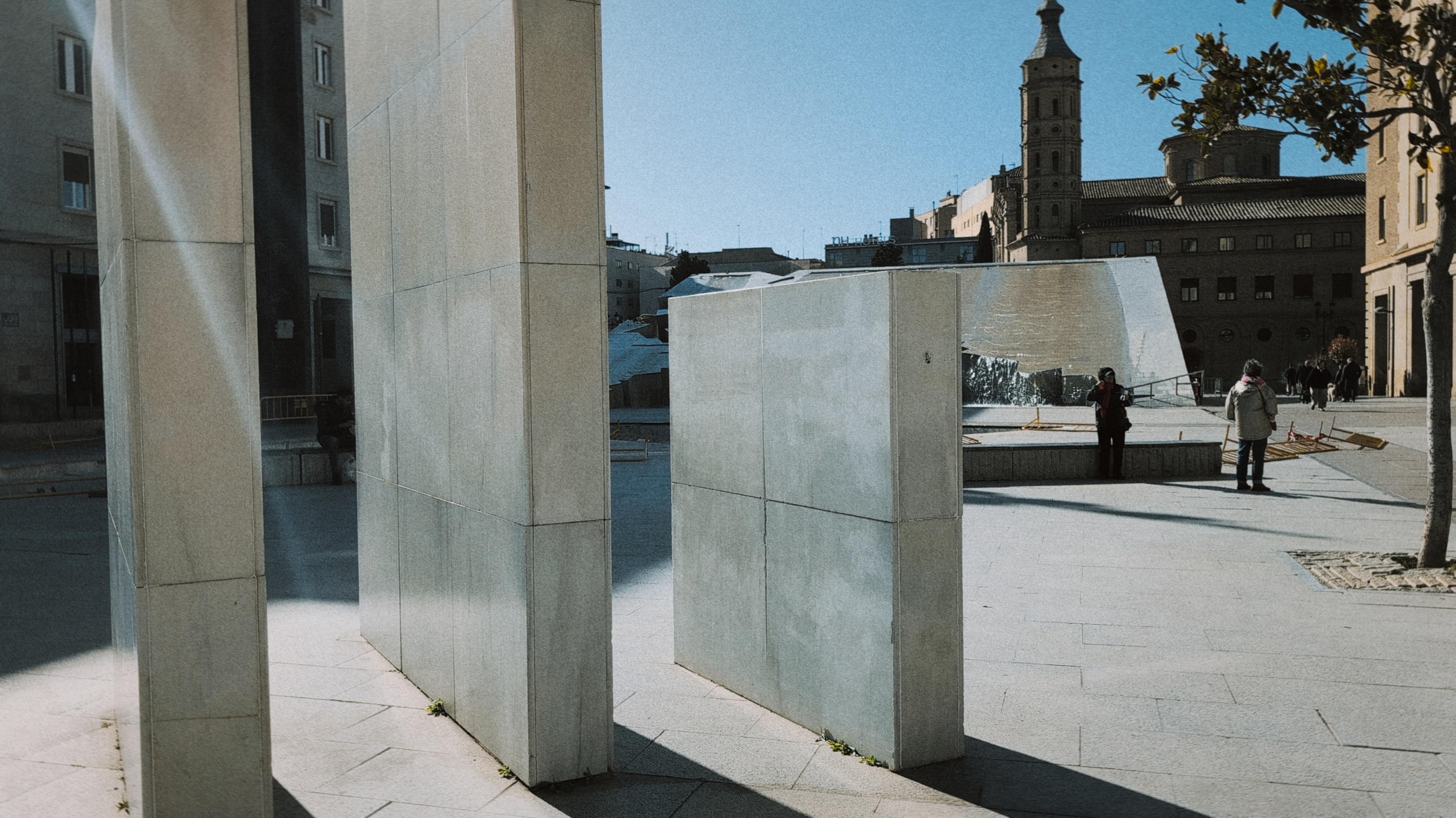
Three marble blocks represent Columbus’ ships. The entire structure is a reference to the fact that the Feast of Our Lady of Pilar coincides with the day Columbus discovered America.
What stuck with me most: inside the cathedral, two bombs from the Spanish Civil War are still on display – lodged in the walls, but never detonated. Diego mentioned that many Spaniards are reluctant to speak openly about that period, and that there are voices who oppose displaying the bombs at all. I couldn’t help thinking of Germany. How we’ve learned to engage openly with our own history. Not without pain, but with the understanding that suppression doesn’t solve anything in the long run. Whether that’s better or worse is hard to say – but it’s different.
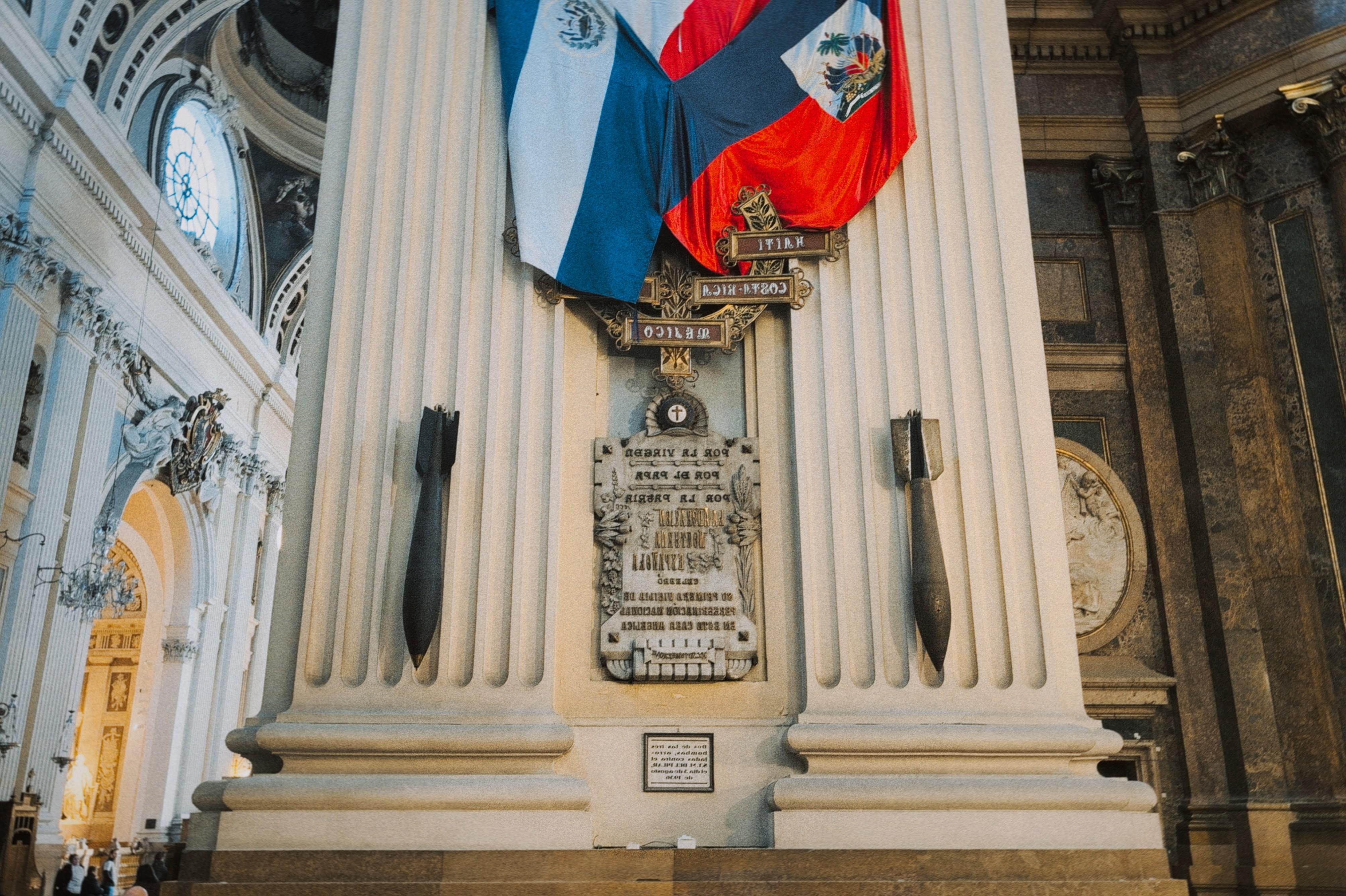
The two bombs displayed inside the Basilica del Pilar are believed to be the ones that were dropped on the basilica on August 3, 1936
Two days, two worlds. The work feels meaningful – perhaps even more so than I’d expected. And the city gives me the feeling that there’s still a lot to discover.
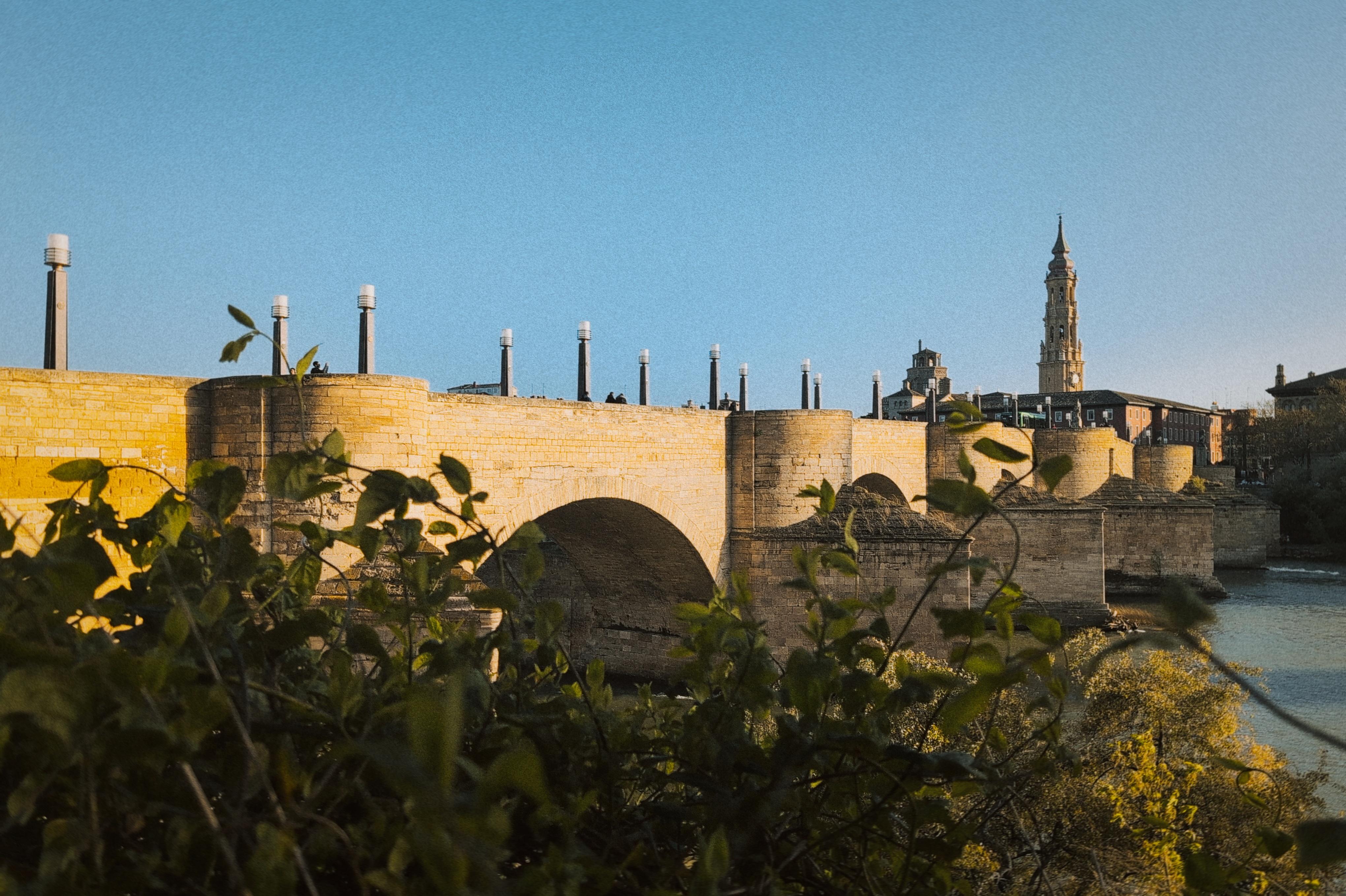
On the way back to the bridge, I took a few photos. The wind that evening was so strong it genuinely stopped you in your tracks for a moment. I’d been warned beforehand – but some things you simply have to experience for yourself.